
Applications
Start with the information your product needs.
Tunoptix works with product teams to match optical design, calibration and computation to the imaging task. We integrate with selected image sensors or detectors and evaluate the complete path against representative scenes and product constraints.
Full-color, spectral, and narrowband imaging
Mobile, wearable and connected devices
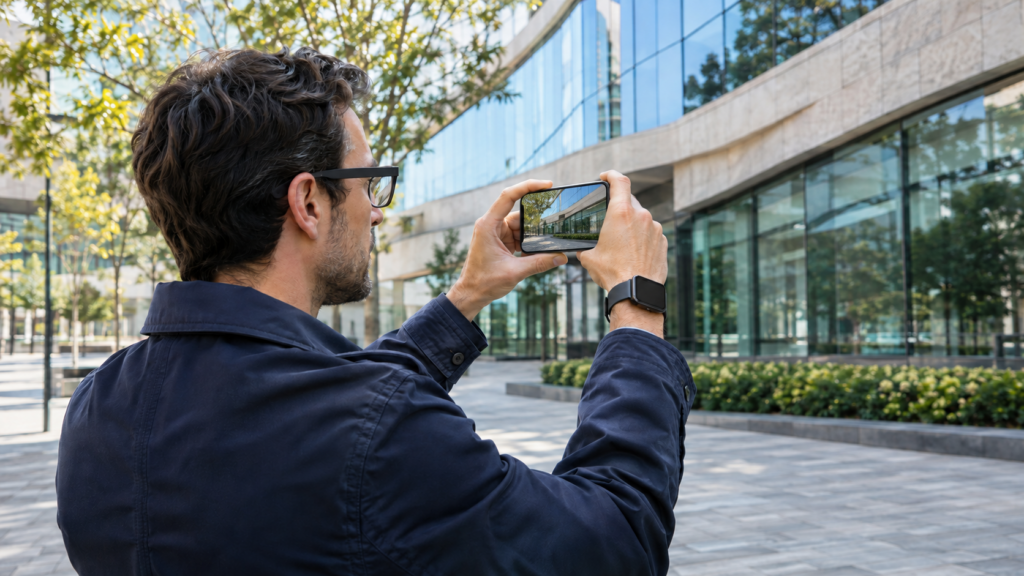
Explore compact camera architectures for phones, wearables and connected products. Balance optical space with spatial detail, color quality, spectral information and host processing.
Evaluation focus: Image quality and processing requirements across representative scenes and illumination, within the product’s packaging constraints.
Spectral Imaging
Personal care and wellbeing

Evaluate wavelength-dependent skin appearance, cosmetic shade selection and product-coverage assessment. The band plan, illumination and calibration are selected for each task and checked against appropriate reference measurements.
Evaluation focus: Repeatability across skin tones, lighting, motion and application conditions. Coverage assessment, color matching and skin-contrast indices are evaluated as distinct tasks.
Spectral imaging
Food, materials and process inspection
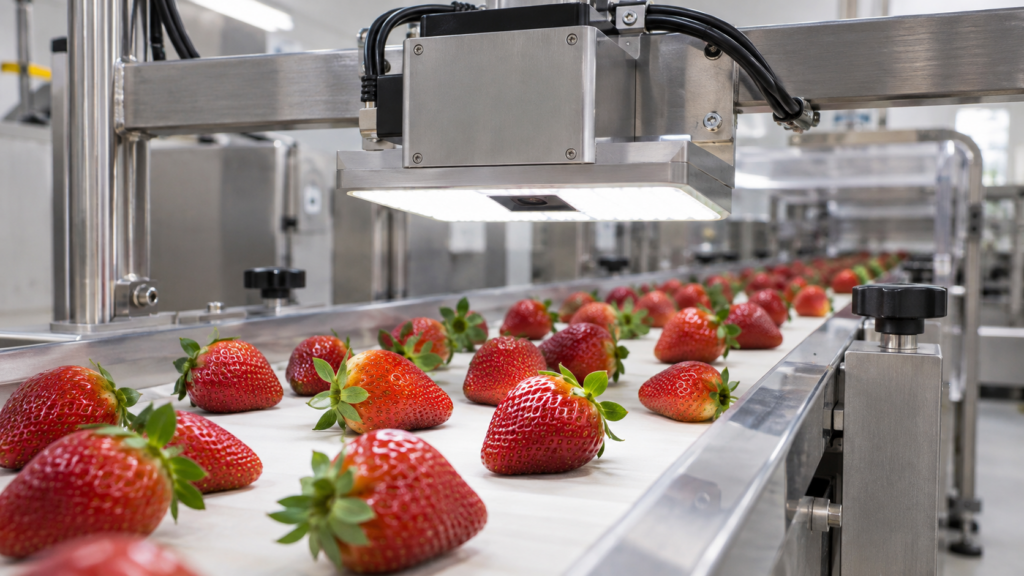
Explore spectral differences associated with produce condition, coatings and materials. Select wavelength bands and acquisition conditions around the sample classes and process decision.
Evaluation focus: Whether spectral measurements add repeatable information across sample variation, surface condition and illumination, using independently established reference labels.
Narrowband NIR, depth receivers and thermal imaging
Robotics and warehouse automation

Develop optical paths for scene perception and obstacle sensing within compact robotic systems. Match NIR illumination and receiver optics to the host acquisition and range-estimation architecture; evaluate thermal imaging with an appropriate LWIR detector where the task benefits from thermal contrast.
Evaluation focus: Usable signal, angular response, scene geometry and integration with the complete sensing chain.
Thermal imaging
Thermal inspection and embedded sensing

Develop LWIR optical assemblies for equipment inspection and thermal scene awareness. Match aperture, detector sampling and field of view to the required detail and working distance.
Evaluation focus: Scene contrast and spatial detail across operating conditions. Temperature-measurement applications additionally require radiometric calibration and environmental compensation.
Thermal and narrowband imaging
Mobility and autonomous platforms

Evaluate compact optical paths for observing people, vehicles and surrounding scenes. Choose thermal and actively illuminated NIR configurations around the operating environment, detector and host perception requirements.
Evaluation focus: Scene visibility, motion, illumination and environmental performance within the broader perception system.
Thermal and wavelength-specific imaging
Airborne and remote platforms
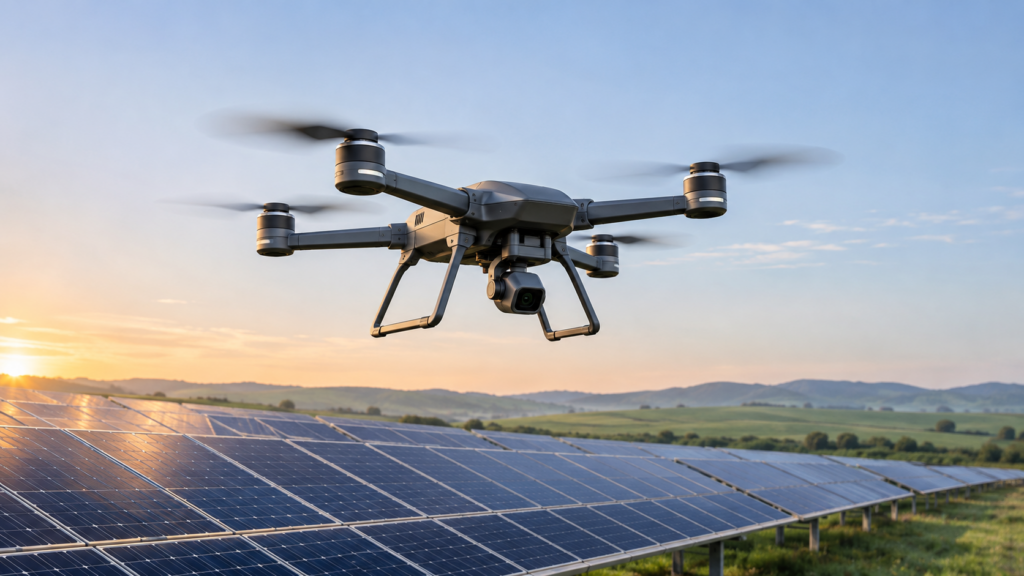
Explore meta-optical architectures where aperture, optical mass, packaging and image information matter at platform level. Select the operating band and detector for the scene and environment.
Short label
Evaluation focus: Image detail, operating conditions and integration evidence needed for the next platform development milestone.
These examples describe application-development areas. Images are illustrative; each sensing modality requires an appropriate detector and acquisition method. Application accuracy and deployment readiness are established through the relevant evaluation program.
Bring the decision your product must make.
Share representative scenes or samples, the constraint that matters most and the evidence needed for your next decision. We will help shape a focused evaluation.